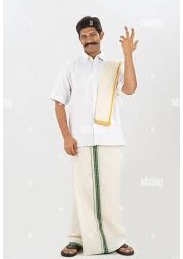
Half of the men's clothing is called half. The dhoti plays a major role in our traditional men's clothing. Wearing this dhoti, especially a pure white dhoti, is a reflection of a fact, i.e., it symbolizes the tradition of Indians. I read a book on the internet about wearing a dhoti in India. I will share its Tamil translation with you here.
The Art of Dhoti Tying: Embracing an Icon of Indian Culture
The dhoti, a traditional attire worn by men in India, is not just a garment but a symbol of cultural heritage and identity. Its simplicity and elegance have made it a timeless garment, appreciated for its comfort and versatility. This article explores the method of dhoti tying and the various types that enrich its cultural significance.
How to Tie a Dhoti
Dhoti tying is an art that requires practice and precision. It is usually a rectangular piece of cloth, usually about 4 to 5 meters long, which is wrapped around the waist and legs. Here is a step-by-step guide to the traditional method of dhoti tying:
Preparation:
Start by folding the dhoti lengthwise to the appropriate width. Stand the cloth upright, making sure the long side is up.
Initial Wrap:
Hold one end of the dhoti at your waist and wrap it around your waist from behind, bringing it to the front on the right side.
Dhoti and Protection:
Place the edge of the dhoti on your waistband on the right hip. Keep wrapping it around your waist until you get a full circle.
Making the dhoti:
With the remaining fabric, create pleats by folding the fabric back and forth. The number of pleats can vary, but five to seven pleats are usually made.
Final tuck:
Neatly attach the pleats to the waistband at the front. Adjust the length so that the dhoti pulls neatly, which ensures comfort and ease of movement.
Styling:
Some people prefer to let the pleats hang down the front, while others may choose to fold them down for a neat look.
Types of dhoti
The dhoti is celebrated in various parts of India, and each has its own unique style and significance:
1. South Indian style (Panje or Veshti)
Worn mainly in Tamil Nadu and Kerala. This style is usually plain white or cream in color, sometimes with a colored border.
2. North Indian Style
The traditional version in North India, known as a "lungi" when worn casually, often comes in vibrant colors and is worn during festivals and ceremonies.
3. Dhoti-Kurta
A popular combination in many northern states, the dhoti, along with a kurta, is paired with a long tunic. This ensemble is common during cultural events and celebrations.
4. Maharashtrian Style (Dhotar)
In Maharashtra, the dhoti is worn with a unique twist, featuring a unique fold that allows freedom of movement, suitable for farm work and everyday activities.
5. Bengali Style
Known for its intricate drapery, the Bengali dhoti is often worn with a Punjabi (kurta), and is synonymous with traditional weddings and cultural events.
Cultural Significance
The dhoti is more than just a garment; It is a testament to India’s rich cultural tapestry. It symbolizes dignity, simplicity and elegance. Historically, it has been the preferred attire of respected leaders like Mahatma Gandhi, who chose the dhoti as a symbol of self-confidence and connection with the masses.
In contemporary times, the dhoti is experiencing a renaissance, being embraced by the younger generation who appreciate its cultural roots and aesthetic appeal. Fashion designers are also incorporating dhoti elements into modern designs, celebrating its versatility and timeless appeal.
Conclusion
The dhoti remains an enduring symbol of Indian culture, admired for its elegance and simplicity. Whether worn in traditional settings or adapted to suit modern fashion, the dhoti continues to weave its heritage into the fabric of Indian society. Understanding and mastering the art of dhoti tying not only connects individuals to their heritage, but also celebrates the diverse and vibrant cultures that make up India’s rich history.
.jpeg)



Comments
Post a Comment